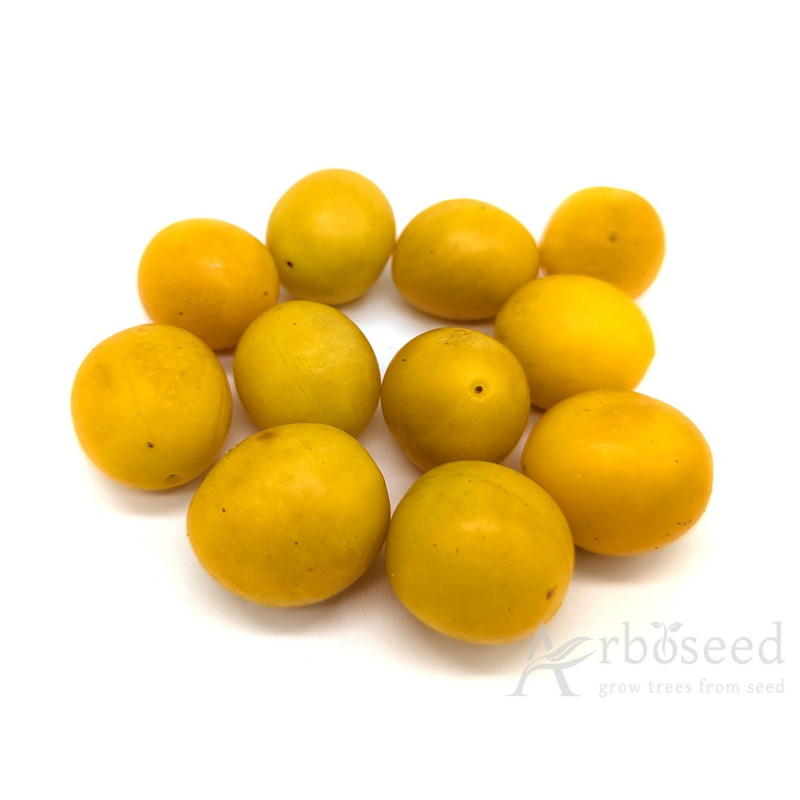

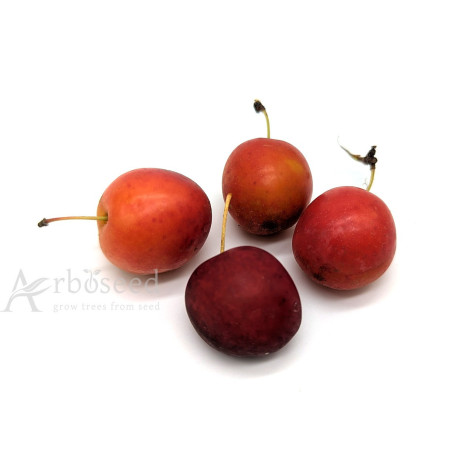
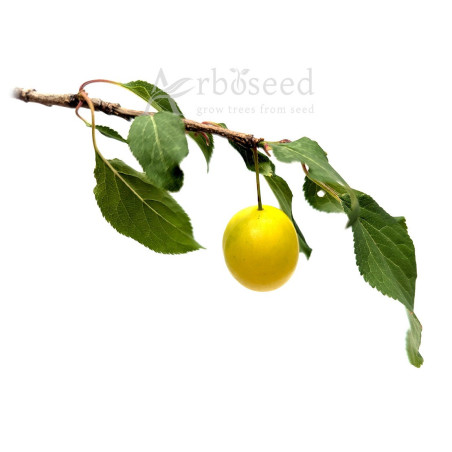

prunus cerasifera, myrobalana, divaricata
prunus cerasifera, myrobalana, divaricata
 Delivery
Usually 4 business days in EU by courier (DPD, GLS).
 Payment
PayPal or bank transfer
| 10 g | approx 22 seeds |
| 50 g | approx 114 seeds |
| 100 g | approx 227 seeds |
| 1.000 seeds | approx 440 g |
Cherry plum also known as myrobalan plum (latin: prunus cerasifera, myrobalana, divaricata) - seeds
Botanical name synonyms:
Data sheet
Recommended method: warm followed by cold stratification, or natural outdoor stratification
Cherry plum seeds are enclosed in hard stones and may exhibit deep dormancy. Germination can be slow and uneven, and the requirements may vary between seed lots. Proper pretreatment and patience are therefore important.
If the stones have been collected from fresh fruit, remove all remaining flesh and clean them thoroughly.
Soak the stones in clean, room-temperature water for approximately 24 hours.
Do not crack the hard stones or damage the seeds inside.
Place the stones in a slightly moist medium, such as a 1:1 mixture of sand and peat or moist vermiculite.
Temperature: approximately 20–25°C (68–77°F)
Duration: initially 2–4 weeks
Moisture: keep the medium slightly moist, never waterlogged
Place the mixture in a container that limits moisture loss while allowing some air exchange. Check regularly for moisture and signs of mould.
After the warm phase, gradually lower the storage temperature over approximately 5–6 weeks until it reaches around 3°C (37°F).
Then continue stratification at approximately 2–5°C (36–41°F) until the first signs of germination appear. This may take additional time, depending on the seed lot.
Keep the medium slightly moist throughout the process and ensure adequate air exchange.
If a root begins to emerge, carefully sow the germinated stone without damaging the delicate root.
Important: Cherry plum seeds can germinate very unevenly. Even correctly performed stratification does not guarantee a high germination rate. An alternative for fresh stones is autumn sowing outdoors, allowing natural seasonal temperature changes to help break dormancy.
Sow the stones in pots, seed trays, or a nursery bed using a well-draining growing medium.
Recommended sowing depth: approximately 3–5 cm (1¼–2 inches).
A seed-starting compost mixed with sand or perlite is suitable. Water gently after sowing, avoiding waterlogged conditions.
If the stones have already started to germinate, handle them carefully to avoid damaging the emerging roots.
Provide the following conditions:
Temperature: moderate temperatures, ideally around 10–20°C (50–68°F) after stratification
Light: a bright location once seedlings emerge
Moisture: keep the substrate evenly moist but not saturated
Ventilation: ensure good air circulation to reduce the risk of mould
Germination may occur gradually. Some stones may remain dormant for longer and germinate during the following growing season. Do not discard ungerminated stones too early.
Once seedlings emerge, provide plenty of light and maintain moderate soil moisture.
When the seedlings are large enough to handle safely, transplant them carefully into individual containers, taking care not to damage their roots.
Gradually acclimatize young plants to outdoor conditions. Protect them from excessive drying and extreme weather.
Do not fertilize the seeds or newly emerged seedlings.
Begin feeding approximately 4–6 weeks after emergence, using a balanced, water-soluble fertilizer at around one-quarter of the manufacturer's recommended strength.
Adjust feeding according to the plants' growth and avoid excessive fertilizer concentrations.
Cherry plum stones have deep dormancy, so germination can take a considerable amount of time.
Keep the stratification medium slightly moist throughout the process.
Avoid standing water, which can cause the stones to rot.
Do not mechanically damage the hard outer covering.
Germination may be uneven, and some seeds may emerge only during the following growing season.
Autumn sowing outdoors is a practical alternative for fresh, cleaned stones.
Clean the stones → soak for approximately 24 hours → place in a slightly moist medium at 20–25°C for 2–4 weeks → gradually lower the temperature over 5–6 weeks to around 3°C → continue cold stratification at 2–5°C until roots begin to emerge → sow 3–5 cm deep → maintain moderate moisture and allow sufficient time for germination.
With appropriate pretreatment and patient care, Prunus cerasifera can be grown from seed, although germination results may vary between seed lots.

 Cherry plum