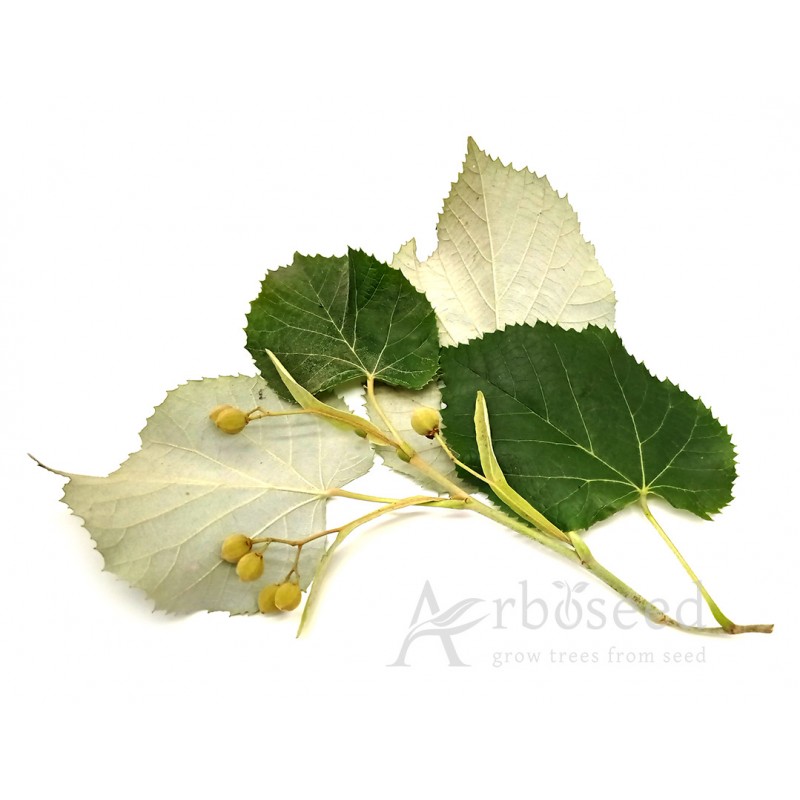

tilia tomentosa
tilia tomentosa
 Delivery
Usually 4 business days in EU by courier (DPD, GLS).
 Payment
PayPal or bank transfer
| 10 g | approx 125 seeds |
| 50 g | approx 625 seeds |
| 100 g | approx 1.250 seeds |
| 1.000 seeds | approx 80 g |
Silver linden (botanical name: tilia tomentosa) - seeds
Data sheet
Tilia tomentosa (Silver Linden) produces seeds with a pronounced and complex dormancy. Successful germination can therefore require a prolonged dormancy-breaking treatment and considerable patience.
For practical seed propagation, a moist warm stratification followed by cold stratification is recommended.
Before stratification, hydrate the seeds:
Place the seeds in a clean container.
Cover them with room-temperature water.
Soak for approximately 24 hours.
Drain the seeds thoroughly.
Do not leave the seeds submerged for extended periods.
The warm phase is an important part of the dormancy-breaking process.
Mix the seeds with a slightly moist medium such as vermiculite, perlite, clean horticultural sand, or coconut coir.
Place the seeds and medium in a sealed plastic bag or closed container.
Maintain a temperature of approximately 15–20°C (59–68°F).
Continue warm stratification for approximately 8–12 weeks.
Check the seeds regularly for moisture and signs of mould.
The medium should remain slightly moist, but never wet or waterlogged.
After completing the warm phase:
Transfer the sealed bag or container to a refrigerator.
Maintain a temperature of approximately 2–5°C (36–41°F).
Continue cold stratification for approximately 12–16 weeks.
Check the seeds every 1–2 weeks to ensure that the medium remains slightly moist.
If a seed begins to germinate during stratification, carefully remove it and sow it immediately, taking care not to damage the emerging root.
After completing stratification, sow the seeds as soon as possible.
Prepare a light, well-drained and well-aerated growing medium.
Sow the seeds approximately 1–2 cm (0.4–0.8 in) deep.
Cover gently with the growing medium.
Moisten moderately.
Place the container in a bright location.
Avoid excessive sowing depth.
| Parameter | Recommended conditions |
|---|---|
| Soaking | Approximately 24 hours |
| Warm stratification | 15–20°C (59–68°F) for 8–12 weeks |
| Cold stratification | 2–5°C (36–41°F) for 12–16 weeks |
| Temperature after sowing | Approximately 15–20°C (59–68°F) |
| Sowing depth | 1–2 cm (0.4–0.8 in) |
| Light | Bright location |
| Moisture | Keep the medium consistently slightly moist |
| Ventilation | Good air circulation |
After sowing, maintain consistent moisture. Do not allow the medium to dry out completely, but avoid prolonged waterlogging.
After successful completion of the stratification process, seedlings may begin to emerge within several weeks after sowing.
Tilia tomentosa can germinate very unevenly and over a prolonged period. Some seeds may require additional time or further dormancy-breaking treatment.
For this reason, do not discard unsprouted seeds prematurely.
An alternative method is to sow the seeds outdoors in autumn in containers or a cold frame and allow them to experience natural winter conditions.
This method is simple and natural, but the timing and uniformity of germination are less predictable than with controlled stratification.
After emergence:
provide plenty of light,
maintain moderate and consistent moisture,
ensure good air circulation,
avoid overwatering,
protect very young seedlings from excessive heat and intense direct sunlight.
Once the seedlings have developed several true leaves and a sufficiently developed root system, they can be carefully transplanted into individual pots.
Take care not to damage the young roots during transplanting.
Do not fertilize immediately after germination.
Approximately 4–6 weeks after emergence, once the seedlings are well established, begin light fertilization using a balanced fertilizer at approximately 1/4 of the manufacturer's recommended dosage.
Skipping stratification.
Using an excessively short stratification period.
Allowing the seeds to dry out during stratification.
Keeping the seeds in excessively wet or waterlogged medium.
Using excessively high temperatures during cold stratification.
Sowing the seeds too deeply.
Excessive watering after sowing.
Using containers without adequate drainage.
Fertilizing young seedlings too early or too heavily.
Discarding seeds prematurely because germination is slow or uneven.
Tilia tomentosa has pronounced and complex seed dormancy.
A warm stratification followed by cold stratification is recommended for practical propagation.
Warm stratification: approximately 8–12 weeks at 15–20°C (59–68°F).
Cold stratification: approximately 12–16 weeks at 2–5°C (36–41°F).
Seeds should remain slightly moist during stratification but must never be submerged in water.
Germination can be slow, uneven and prolonged.
Not all seeds are necessarily expected to germinate at the same time.
Fresh, properly stored seeds generally provide the best results.
Patience is particularly important when propagating Silver Linden from seed.
1. Soak the seeds for approximately 24 hours in room-temperature water.
2. Place the seeds in slightly moist vermiculite, perlite, clean sand or coconut coir.
3. Warm-stratify for 8–12 weeks at 15–20°C (59–68°F).
4. Cold-stratify for a further 12–16 weeks at 2–5°C (36–41°F).
5. After stratification, sow the seeds approximately 1–2 cm (0.4–0.8 in) deep in a light, well-drained growing medium.
6. Maintain approximately 15–20°C (59–68°F) after sowing, provide a bright location and keep the growing medium consistently slightly moist.
Important: Germination of Tilia tomentosa can be slow and highly irregular. Do not discard unsprouted seeds after only a few weeks.
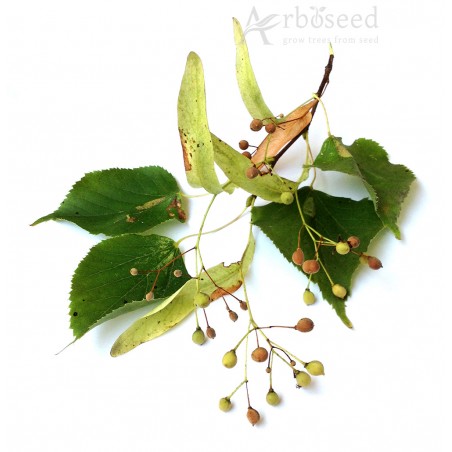
 Silver linden