
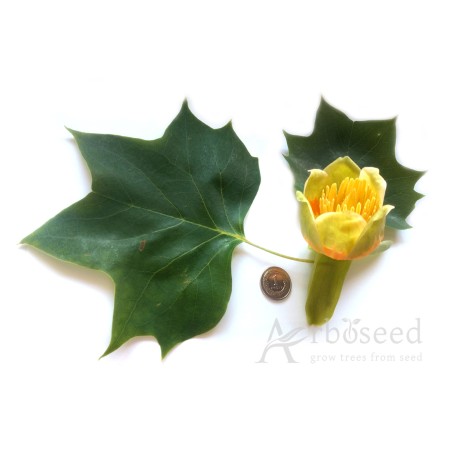


liriodendron tulipifera
liriodendron tulipifera
 Delivery
Usually 4 business days in EU by courier (DPD, GLS).
 Payment
PayPal or bank transfer
| 10 g | approx 182 seeds |
| 50 g | approx 909 seeds |
| 100 g | approx 1.818 seeds |
| 1.000 seeds | approx 55 g |
Tulip tree also known as American tulip tree, tulipwood, tuliptree, tulip poplar, whitewood, fiddletree, and yellow-poplar (botanical name: liriodendron tulipifera) - seeds
» tulip tree seeds
Data sheet
Recommended method: moist cold stratification
Liriodendron tulipifera seeds have physiological dormancy and generally benefit from a period of moist cold stratification before sowing. This treatment helps break dormancy and improves the uniformity of germination.
Place the seeds in clean, room-temperature water for 12–24 hours before stratification.
Do not use hot water or attempt to damage the seed coat.
Mix the seeds with a slightly moist medium such as:
vermiculite,
perlite,
sphagnum moss, or
a mixture of peat/coir and perlite.
The medium should be moist but not wet.
Place the mixture in a sealed plastic bag or container and keep it at approximately 1–5°C (34–41°F) in a refrigerator for 60–90 days.
Check the seeds periodically. The medium must remain slightly moist, but stagnant water should be avoided. If any seed begins to germinate during stratification, sow it carefully without damaging the emerging root.
After cold stratification, sow the seeds in a well-drained, fine-textured growing medium.
Recommended depth:
0.5–1 cm (¼–⅜ inch)
Cover the seeds lightly with the substrate. Do not bury them deeply.
A suitable substrate can consist of approximately 60–70% peat or coco coir and 30–40% perlite.
After sowing, provide:
Temperature: approximately 18–22°C (64–72°F)
Light: bright, indirect light
Moisture: keep the substrate evenly moist, but never waterlogged
Ventilation: ensure good air circulation to reduce the risk of fungal diseases
The first seedlings may appear after approximately 2–6 weeks, although germination can be slower and uneven depending on the seed lot and growing conditions.
Once seedlings emerge, provide them with plenty of light and continue to maintain moderate, even moisture.
Avoid excessive watering. Young Liriodendron seedlings develop a strong root system, so they should not remain in shallow containers for too long.
When the seedlings have developed several true leaves and the root system has filled the initial container, they can be carefully transplanted into individual, deeper pots.
Do not fertilize immediately after germination.
Begin feeding approximately 4–6 weeks after emergence, using a balanced, water-soluble fertilizer at approximately ¼ of the manufacturer's recommended strength.
Gradually increase the amount as the seedlings develop.
Germination may be uneven, even when the seeds are treated correctly.
Do not allow the seeds or young roots to dry out during stratification.
Avoid permanently saturated conditions, as this can cause seed rot.
Do not damage or remove the seed coat.
Seedlings should receive good light but should initially be protected from intense, direct midday sun.
Liriodendron tulipifera is a vigorous tree and will eventually require a deep growing container or planting location.
Soak for 12–24 hours → cold stratify moist seeds for 60–90 days at 1–5°C → sow 0.5–1 cm deep → keep at 18–22°C in bright light → maintain evenly moist soil → transplant young seedlings into deeper containers as they develop.
With proper treatment and suitable conditions, Liriodendron tulipifera can be successfully grown from seed.
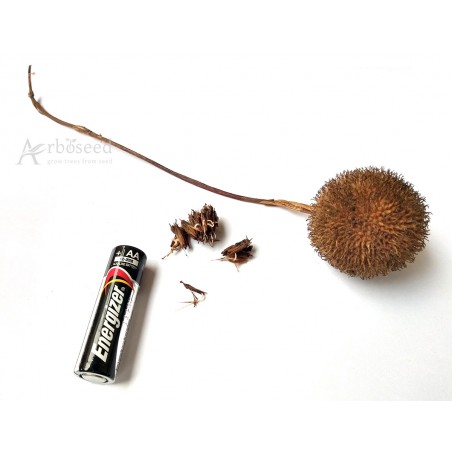

 Tulip tree