carpinus betulus
carpinus betulus
 Delivery
Usually 4 business days in EU by courier (DPD, GLS).
 Payment
PayPal or bank transfer
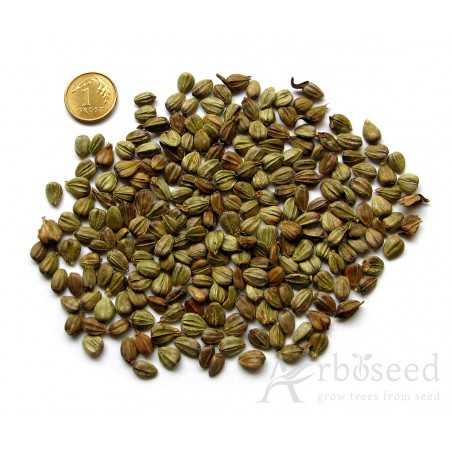
| 10 g | approx 250 seeds |
| 50 g | approx 1.250 seeds |
| 100 g | approx 2.500 seeds |
| 1.000 seeds | approx 40 g |
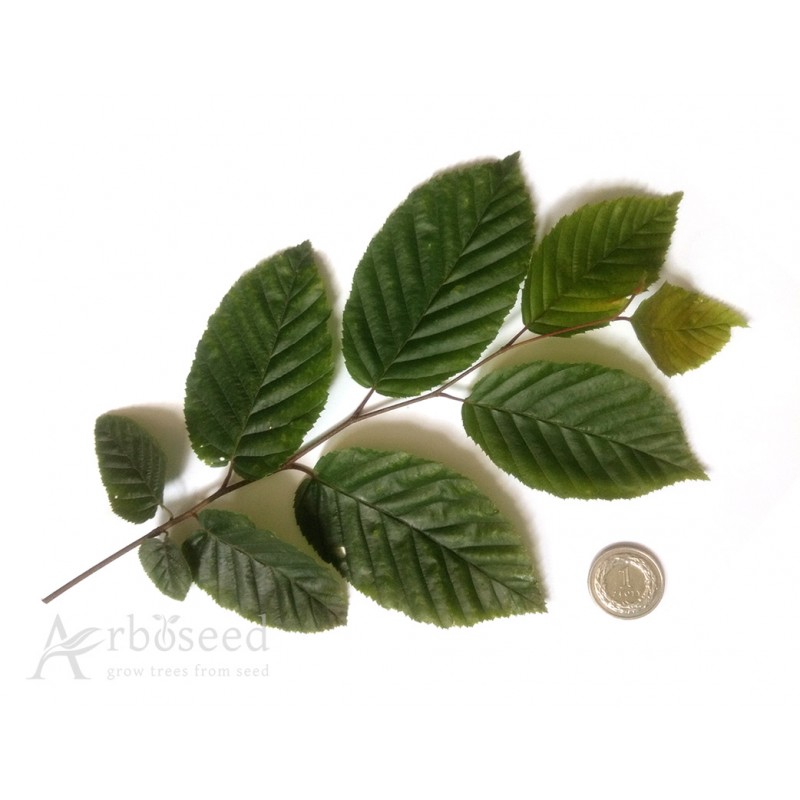
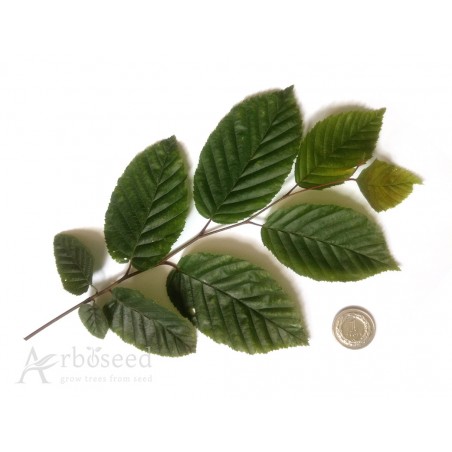
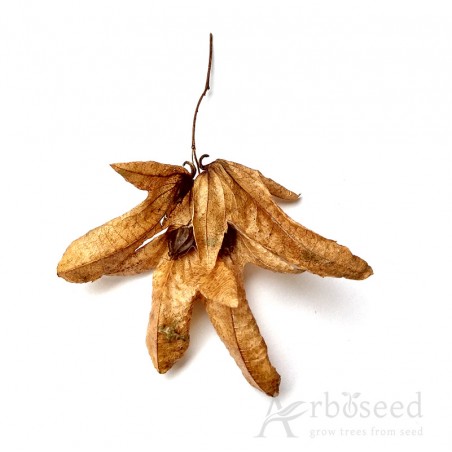
European hornbeam (botanical name: carpinus betulus) - seeds
Data sheet
Carpinus betulus (European hornbeam) has a complex seed dormancy. For reliable and more uniform germination, a two-stage moist stratification process — warm followed by cold stratification — is recommended.
This procedure imitates the natural seasonal conditions experienced by the seeds in the wild.
If the seeds have been collected recently, remove any debris and remaining plant material.
Do not allow fresh seeds to dry out before starting stratification.
If the seeds are already dry, they should first be rehydrated.
Place the seeds in a clean container.
Cover with room-temperature water.
Soak for approximately 12–24 hours.
Drain the water and begin stratification.
Mechanical scarification is not normally required.
The first stage is a period of warm, moist stratification.
Mix the seeds with a slightly moist medium such as:
vermiculite,
perlite,
or clean horticultural sand.
Place the seeds and medium in a sealed plastic bag or closed container.
Keep at approximately 15–20°C (59–68°F).
Stratify for approximately 8–12 weeks.
Check the seeds every 1–2 weeks to ensure that the medium remains slightly moist and to monitor the seeds.
The medium should remain moist but never waterlogged.
After the warm stratification period, begin the second stage:
Move the seeds to a temperature of approximately 2–5°C (36–41°F).
Continue moist stratification for approximately 8–12 weeks.
Check the seeds regularly for moisture and signs of germination.
If seeds begin to germinate during stratification, carefully sow them into individual pots or a suitable seed tray.
Take care not to damage the emerging root.
After completion of the cold stratification period, sow the seeds as soon as possible.
Prepare a light, well-drained seed-starting medium.
Sow the seeds approximately 1–2 cm (0.4–0.8 in) deep.
Cover gently with the growing medium.
Water moderately.
Place the container in a bright location.
| Parameter | Recommended conditions |
|---|---|
| Warm stratification | 15–20°C (59–68°F) for 8–12 weeks |
| Cold stratification | 2–5°C (36–41°F) for 8–12 weeks |
| Temperature after sowing | 15–20°C (59–68°F) |
| Sowing depth | 1–2 cm (0.4–0.8 in) |
| Light | Bright light |
| Moisture | Keep the medium evenly moist |
After sowing, maintain consistent moisture. Avoid both complete drying and prolonged waterlogging.
After successful stratification, the first seedlings may appear approximately 2–6 weeks after sowing.
Germination can be uneven and some seeds may require considerably more time.
Do not discard the seed tray prematurely if some seeds remain dormant after several weeks.
After emergence:
provide plenty of light,
maintain moderate and consistent moisture,
ensure good air circulation,
avoid overwatering,
protect young seedlings from very intense direct sunlight.
When seedlings have developed several true leaves and a sufficiently developed root system, they can be carefully transplanted into individual pots.
Young seedlings do not require heavy feeding.
Approximately 3–4 weeks after emergence, once the seedlings are well established, begin light fertilization with a balanced fertilizer at approximately 1/4 of the manufacturer's recommended dosage.
Skipping stratification.
Using only cold stratification.
Allowing seeds to dry out during stratification.
Keeping the seeds in excessively wet conditions.
Sowing too deeply.
Using excessively high temperatures during germination.
Over-fertilizing young seedlings.
European hornbeam has complex seed dormancy.
A warm stratification period followed by cold stratification is recommended for reliable germination.
The total pre-sowing treatment may take approximately 16–24 weeks.
Do not allow the seeds to dry out during stratification.
Do not freeze the seeds.
Germination may be slow and uneven.
Fresh, properly stored seeds generally provide the best results.
Soak the seeds for 12–24 hours, then place them in a slightly moist stratification medium.
Use the following sequence:
8–12 weeks at 15–20°C (59–68°F) → followed by 8–12 weeks at 2–5°C (36–41°F).
After stratification, sow the seeds 1–2 cm (0.4–0.8 in) deep, maintain approximately 15–20°C (59–68°F), provide bright light and keep the growing medium evenly moist.
Note: The exact stratification period may vary depending on seed freshness, provenance and previous storage conditions. Seeds with an unknown storage history may germinate more slowly or unevenly.
Carpinus betulus