

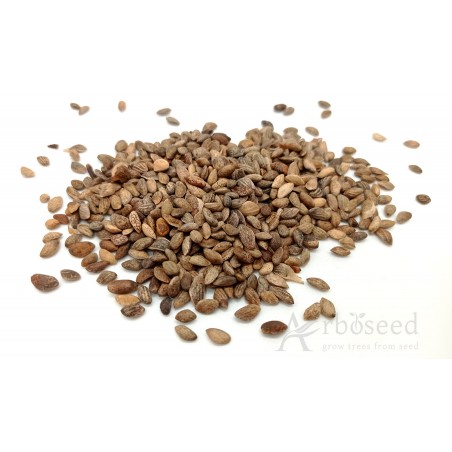
pinus thunbergii
pinus thunbergii
 Delivery
Usually 4 business days in EU by courier (DPD, GLS).
 Payment
PayPal or bank transfer
| 10 g | approx 550 seeds |
| 50 g | approx 2.750 seeds |
| 100 g | approx 5.500 seeds |
| 1.000 seeds | approx 18 g |
Black pine also known as Japanese black pine, Japanese pine (botanical name: pinus thunbergii) - seeds
Data sheet
Seeds of Pinus thunbergii (Japanese Black Pine) have a moderate physiological dormancy. A short period of moist cold stratification can improve and synchronize germination and is therefore recommended before sowing.
Place the seeds in a container filled with clean, room-temperature water.
Soaking time: 12–24 hours
The water may be replaced once during soaking.
After soaking, drain the seeds thoroughly.
Soaking ensures that the seeds are evenly hydrated before stratification.
Prepare a slightly moist medium such as vermiculite, perlite, or clean sand. The medium should be moist but not wet – when squeezed, it should not release significant amounts of water.
Mix the seeds with the medium and place everything in a sealed plastic bag or container.
Temperature: 2–5°C (36–41°F)
Duration: 4–6 weeks
A refrigerator is suitable for this purpose.
Check the seeds periodically to ensure that the medium remains slightly moist and that there is no mold or excessive moisture.
If a seed begins to germinate during stratification and a root emerges, carefully remove it and sow it immediately, taking care not to damage the young root.
After completing the cold stratification, sow the seeds in a light, well-draining growing medium.
Recommended sowing depth:
approximately 0.5–1 cm (0.2–0.4 in).
A quality seed-starting mix can be used, or a mixture of peat with perlite or sand.
After sowing, gently moisten the medium.
Place the container in a bright location with plenty of indirect or filtered light.
Recommended germination temperature:
approximately 18–22°C (64–72°F).
Keep the growing medium consistently slightly moist, but never waterlogged. Good drainage is essential.
Adequate air circulation is recommended to reduce the risk of mold and fungal diseases.
The first seeds may germinate approximately:
2–4 weeks after sowing.
Germination may be uneven and can continue for several additional weeks. Do not discard the container simply because some seeds have germinated – later germination is normal.
Once the seedlings emerge, provide:
a very bright location,
good air circulation,
regular but moderate watering,
protection from intense direct sunlight during the earliest stage of growth.
Avoid excessive watering. Japanese Black Pine does not tolerate prolonged waterlogged conditions.
Once the seedlings have developed their first set of true needles, they can gradually be exposed to stronger light.
Do not fertilize immediately after germination.
Light fertilization can begin approximately 4–6 weeks after emergence, using a fertilizer suitable for young plants or bonsai.
Use approximately 1/4 of the manufacturer's recommended dosage at first.
Fertilization should remain moderate, as excessive fertilizer concentration can damage the young root system.
Allowing the seeds to dry out during stratification.
Keeping the seeds in excessively wet or waterlogged medium.
Sowing the seeds too deeply.
Overwatering after sowing.
Using containers without adequate drainage.
Exposing newly emerged seedlings to intense direct sunlight.
Fertilizing too early or too heavily.
Discarding the seeds too soon because germination is uneven.
Soak for 12–24 hours → moist cold stratification for 4–6 weeks at 2–5°C (36–41°F) → sow 0.5–1 cm (0.2–0.4 in) deep → germinate at approximately 18–22°C (64–72°F).
Do not freeze the seeds. Throughout the process, the seeds should remain slightly moist but should never be kept in standing water.

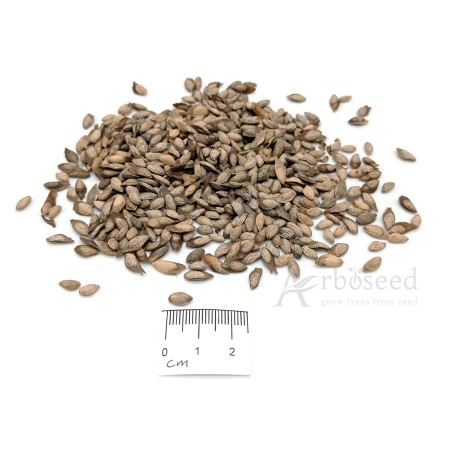
 Japanese black pine