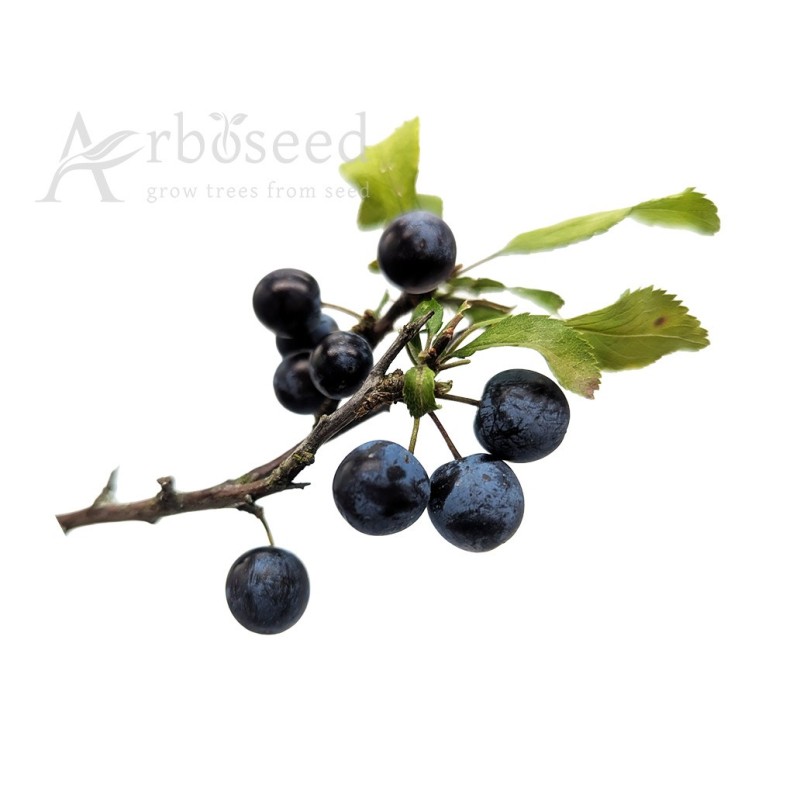

prunus spinosa
prunus spinosa
 Delivery
Usually 4 business days in EU by courier (DPD, GLS).
 Payment
PayPal or bank transfer
| 10 g | approx 34 seeds |
| 50 g | approx 172 seeds |
| 100 g | approx 345 seeds |
| 1.000 seeds | approx 290 g |
Blackthorn also known as sloe (latin: prunus spinosa) - seeds
Data sheet
Species: Prunus spinosa
Common name: Blackthorn / Sloe
Prunus spinosa seeds have deep dormancy and normally require a suitable stratification period before they can germinate.
For reliable results, a warm stratification followed by cold stratification is recommended. Germination can be slow and uneven, so patience is important.
Place the seeds in clean, room-temperature water for approximately 24 hours.
After soaking, drain the seeds thoroughly. Do not leave them submerged in water for several days.
Mix the seeds with a slightly moist medium such as:
vermiculite,
perlite,
clean horticultural sand.
The medium should be moist but not wet.
Place the seeds and the medium in a sealed container or plastic bag and keep them at approximately 15–20°C for 8–12 weeks.
Check the seeds periodically. If mould develops, remove affected seeds and improve ventilation slightly.
After the warm stratification period, move the seeds to a refrigerator.
Keep them at approximately 2–5°C for 12–16 weeks.
The stratification medium should remain slightly moist throughout the entire period.
Do not allow the seeds to dry out and do not freeze them.
Some seeds may begin to germinate during cold stratification. If a root appears, carefully plant the germinating seed into the growing medium without damaging the young root.
After stratification, sow the seeds in a well-drained seed-starting medium.
Recommended sowing depth: approximately 1–2 cm.
After sowing:
temperature: 15–20°C;
light: bright, preferably indirect light;
moisture: keep the medium evenly and moderately moist;
avoid waterlogging.
Do not allow the growing medium to dry out completely.
The first seedlings may appear after several weeks. However, germination of blackthorn can be irregular and extended over time.
Do not discard ungerminated seeds after only a few weeks. Some seeds may germinate considerably later.
After emergence:
provide plenty of bright, indirect light;
maintain moderate substrate moisture;
avoid both excessive drying and waterlogging;
provide good air circulation;
protect young seedlings from very strong direct sunlight.
Once the seedlings have developed several true leaves, they can be carefully transplanted into individual pots if necessary.
Do not fertilize heavily immediately after emergence.
Begin feeding approximately 4–6 weeks after emergence, using a balanced liquid fertilizer at around ¼ of the manufacturer's recommended strength.
Blackthorn seeds can also be sown outdoors in autumn, directly into the ground or into containers.
Sow the seeds approximately 1–2 cm deep. Natural exposure to autumn and winter temperatures can provide the conditions necessary to overcome seed dormancy.
This is a simple method, although germination may be irregular and may not occur entirely during a single spring.
When sowing outdoors, protect the seeds from rodents and excessive moisture.
Skipping stratification.
Using an insufficient stratification period.
Keeping the seeds excessively wet.
Allowing the seeds to dry out during stratification.
Freezing the seeds.
Sowing too deeply.
Damaging the emerging root when planting germinated seeds.
Discarding ungerminated seeds too early.
Soak for 24 hours → warm stratification at 15–20°C for 8–12 weeks → cold stratification at 2–5°C for 12–16 weeks → sow 1–2 cm deep → maintain 15–20°C → keep moderately moist → wait patiently for germination.
Please note: Prunus spinosa seeds can vary in their level of dormancy, so germination time may differ between seed lots. The seeds do not necessarily germinate all at the same time.
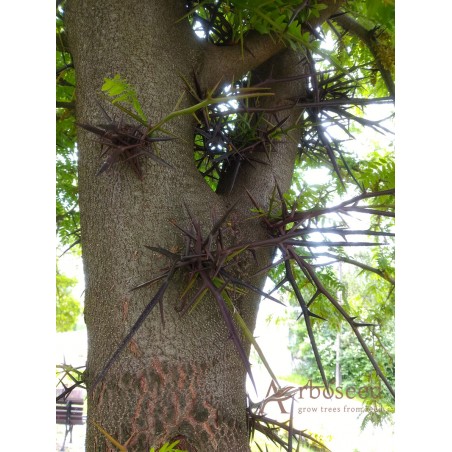
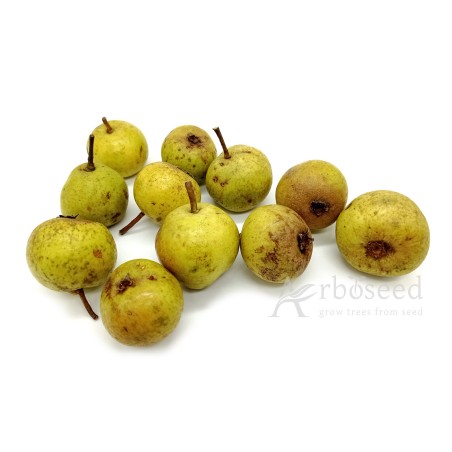
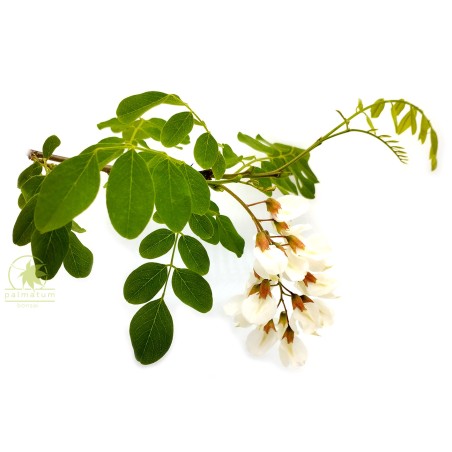 Prunus spinosa