- out-of-Stock


prunus laurocerasus
prunus laurocerasus
 Delivery
Usually 4 business days in EU by courier (DPD, GLS).
 Payment
PayPal or bank transfer
| 10 g | approx 77 seeds |
| 50 g | approx 385 seeds |
| 100 g | approx 769 seeds |
| 1.000 seeds | approx 130 g |
Cherry laurel also known as common laurel or English laurel (botanical name: prunus laurocerasus) - seeds
Data sheet
Prunus laurocerasus (Cherry Laurel) seeds have physiological dormancy and generally benefit from cold, moist stratification before sowing. Proper stratification significantly improves and synchronizes germination.
No scarification is normally required.
If the seeds are enclosed in fruit, remove all remaining pulp carefully and wash the seeds thoroughly. Fruit residue can inhibit germination and encourage mould.
Do not allow the cleaned seeds to dry out completely.
A recommended method is moist cold stratification.
Mix the seeds with a slightly moist, sterile medium such as:
vermiculite,
perlite,
or clean, moist sand.
Place the seeds and medium in a sealed plastic bag or container.
Keep at approximately 3–5°C (37–41°F) in a refrigerator.
Stratify for approximately 8–12 weeks.
Check the seeds periodically. The medium should remain slightly moist, but never waterlogged.
If mould appears, remove the affected material and improve ventilation.
After stratification, sow the seeds promptly.
Use a light, well-drained seed-starting medium.
Sow the seeds approximately 1–2 cm (0.4–0.8 in) deep.
Cover gently with the growing medium.
Water thoroughly but avoid waterlogging.
Place the container in a bright location.
| Parameter | Recommended conditions |
|---|---|
| After stratification | 15–20°C (59–68°F) |
| Light | Bright, indirect light |
| Growing medium | Consistently moist, well drained |
| Sowing depth | 1–2 cm (0.4–0.8 in) |
Avoid excessive heat immediately after stratification. Moderate temperatures are preferable for germination.
Germination can be relatively slow and irregular.
Under suitable conditions, seedlings may begin to emerge approximately 2–6 weeks after sowing, although some seeds may take considerably longer.
Do not discard the seed tray too quickly if germination does not occur within the first few weeks.
Once seedlings emerge:
provide plenty of light,
maintain moderate soil moisture,
ensure good air circulation,
avoid prolonged waterlogging.
When seedlings have developed several true leaves and a well-developed root system, they can be carefully transplanted into individual pots.
Begin light fertilization only after the seedlings are established.
Approximately 3–4 weeks after emergence, use a balanced fertilizer at approximately 1/4 of the manufacturer's recommended dosage.
Gradually increase the dosage as the plants develop.
Cold, moist stratification is recommended before sowing.
Keep the seeds moist during stratification; do not allow them to dry out.
Do not freeze the seeds unless a specific protocol for the particular seed lot recommends it.
Germination may be slow and uneven.
Fresh seeds generally provide better and more reliable results.
Avoid excessive moisture, which can cause fungal problems and seed rot.
Prunus laurocerasus seeds contain cyanogenic compounds and are toxic if chewed or ingested. Keep seeds away from children and pets. Do not consume the seeds.
For the most reliable results, use 8–12 weeks of moist cold stratification at approximately 3–5°C (37–41°F), followed by sowing at 1–2 cm depth and maintaining approximately 15–20°C (59–68°F) until emergence.
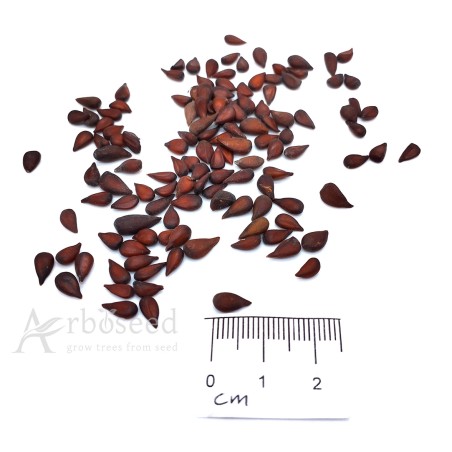 Prunus laurocerasus