

cornus mas
cornus mas
 Delivery
Usually 4 business days in EU by courier (DPD, GLS).
 Payment
PayPal or bank transfer
| 10 g | approx 63 seeds |
| 50 g | approx 313 seeds |
| 100 g | approx 625 seeds |
| 1.000 seeds | approx 160 g |
Cornel, also known as the Cornelian cherry, European cornel or Cornelian cherry dogwood (botanical name: cornus mas) - seeds
Data sheet
Common name: Cornelian Cherry
Botanical name: Cornus mas
Cornelian cherry seeds are enclosed in hard stones and have a complex dormancy mechanism. Germination can be slow and irregular, sometimes extending over two growing seasons. Appropriate pretreatment is therefore essential.
If the seeds are still enclosed in fruit pulp, remove all pulp thoroughly and clean the stones.
Then:
Soak the stones in clean water for approximately 24 hours.
Drain them before beginning stratification.
Do not crack the stones or damage the seed inside.
Cornelian cherry seeds generally benefit from a sequence of warm stratification followed by cold stratification. Cold stratification alone may not be sufficient to overcome dormancy.
Temperature: approximately 20–25°C (68–77°F)
Duration: approximately 16–18 weeks
Medium: slightly moist sand, vermiculite or a mixture of peat and perlite
Mix the stones with the moist medium and place them in a suitable container or plastic bag. Allow a small amount of air exchange.
The medium should remain slightly moist, but never waterlogged.
After completing the warm phase, transfer the stones and their medium to a refrigerator.
Temperature: approximately 2–5°C (36–41°F)
Duration: approximately 15–18 weeks
Location: refrigerator, away from the freezer compartment
Check the medium periodically to ensure that it remains slightly moist. Inspect the stones for mould and remove any affected material carefully.
If germination begins during stratification, transfer the germinated seeds carefully into individual pots.
Important: These durations provide a practical starting protocol. The response can vary according to seed maturity, origin, storage conditions and the particular seed lot.
After stratification, sow the stones in deep pots or containers with adequate drainage holes.
Recommended growing medium:
50–70% peat or coco coir
30–50% perlite or coarse sand
Sow the stones approximately 2–3 cm (0.8–1.2 in) deep.
Cover them with the growing medium and water gently.
Good drainage is essential because excessive moisture can cause the stones or developing seedlings to rot.
After sowing, maintain the following conditions:
Temperature: approximately 15–20°C (59–68°F)
Light: a bright location; provide plenty of indirect light after emergence
Moisture: keep the substrate evenly moist, but not waterlogged
Ventilation: ensure good air circulation to reduce the risk of fungal diseases
Protect newly emerged seedlings from intense direct sunlight until they have gradually acclimatised.
Cornelian cherry germination is often slow and uneven, even after appropriate stratification.
Under favourable conditions, seedlings may emerge during the spring following pretreatment. However, some seeds may remain dormant for considerably longer.
The absence of seedlings during the first growing season does not necessarily mean that the seeds are dead.
Keep ungerminated stones in their containers and allow them to experience further seasonal conditions, maintaining suitable moisture and drainage.
Once seedlings emerge:
Provide a bright growing location.
Water moderately and do not allow the root ball to dry out completely.
Avoid standing water and persistently saturated soil.
Protect young plants from strong winds and extreme temperatures.
Handle seedlings carefully during transplanting to avoid damaging their roots.
Cornelian cherry develops a root system that benefits from sufficient growing space. Deep containers are preferable to shallow seed trays.
Do not fertilize seeds or newly emerged seedlings.
Approximately 4–6 weeks after emergence, once the seedlings are established, begin feeding with a balanced fertilizer suitable for young plants.
Start with approximately ¼ of the manufacturer's recommended concentration.
Avoid excessive fertilization, which can damage delicate young roots.
The stones can also be sown outdoors in autumn, either in deep containers or in a prepared nursery bed.
Natural autumn and winter conditions allow the seeds to experience seasonal temperature changes. However, emergence may be delayed until the following spring or even a later growing season.
Protect outdoor containers from rodents and prevent the growing medium from drying out excessively or becoming waterlogged during winter.
Cornelian cherry seeds have a complex dormancy mechanism.
Warm stratification followed by cold stratification is generally recommended.
Soaking alone or cold stratification alone may not adequately overcome dormancy.
Germination can be slow, irregular and spread over more than one growing season.
Do not discard ungerminated stones prematurely.
Maintain moderate moisture and ensure excellent drainage throughout the process.
Clean the stones → soak for 24 hours → warm-stratify for 16–18 weeks at 20–25°C → cold-stratify for 15–18 weeks at 2–5°C → sow 2–3 cm deep → maintain 15–20°C and moderate moisture → allow sufficient time for germination, as emergence may be delayed.
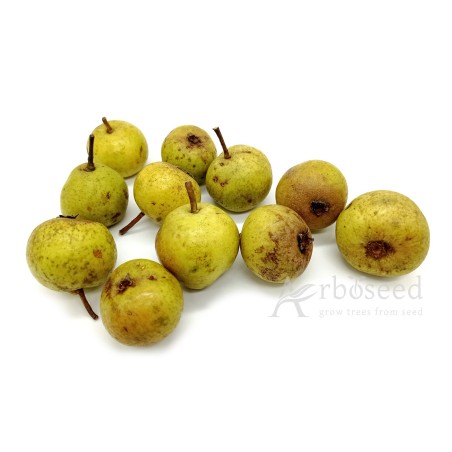


 European cornel